What we build
Six figures · each has its own pageNo modules, no seat licences, no plan tiers. You describe how the business runs. We build the system that runs it. The six things we are asked for most, each described in detail on its own page:
Operations dashboards
Every job, vehicle and dollar on one screen, kept live from the systems you already run.
Read more →Job & fleet tracking
Scheduling, dispatch, proof of delivery and timesheets, on one record from the office to the cab.
Read more →Accounting pipelines
Xero, MYOB, banks, payroll. Data entered once, landing everywhere it belongs, reconciled on the way through.
Read more →Client portals
Your customers check status, approve quotes and pay invoices without ringing the office.
Read more →Quote to cash
From site measure to paid invoice with nothing re-typed in between.
Read more →Custom tools
The system no vendor sells because only your business needs it. If it runs on a process, it can be built.
Read more →Designs
Four plates · fictional clients · full demosThe systems above run the business. These are the websites in front of them, designed from scratch for the trade at hand. Four demonstration sites for four trades we serve, each complete and working, each built around one mechanic drawn from its trade. The businesses are fictional. The work is not.
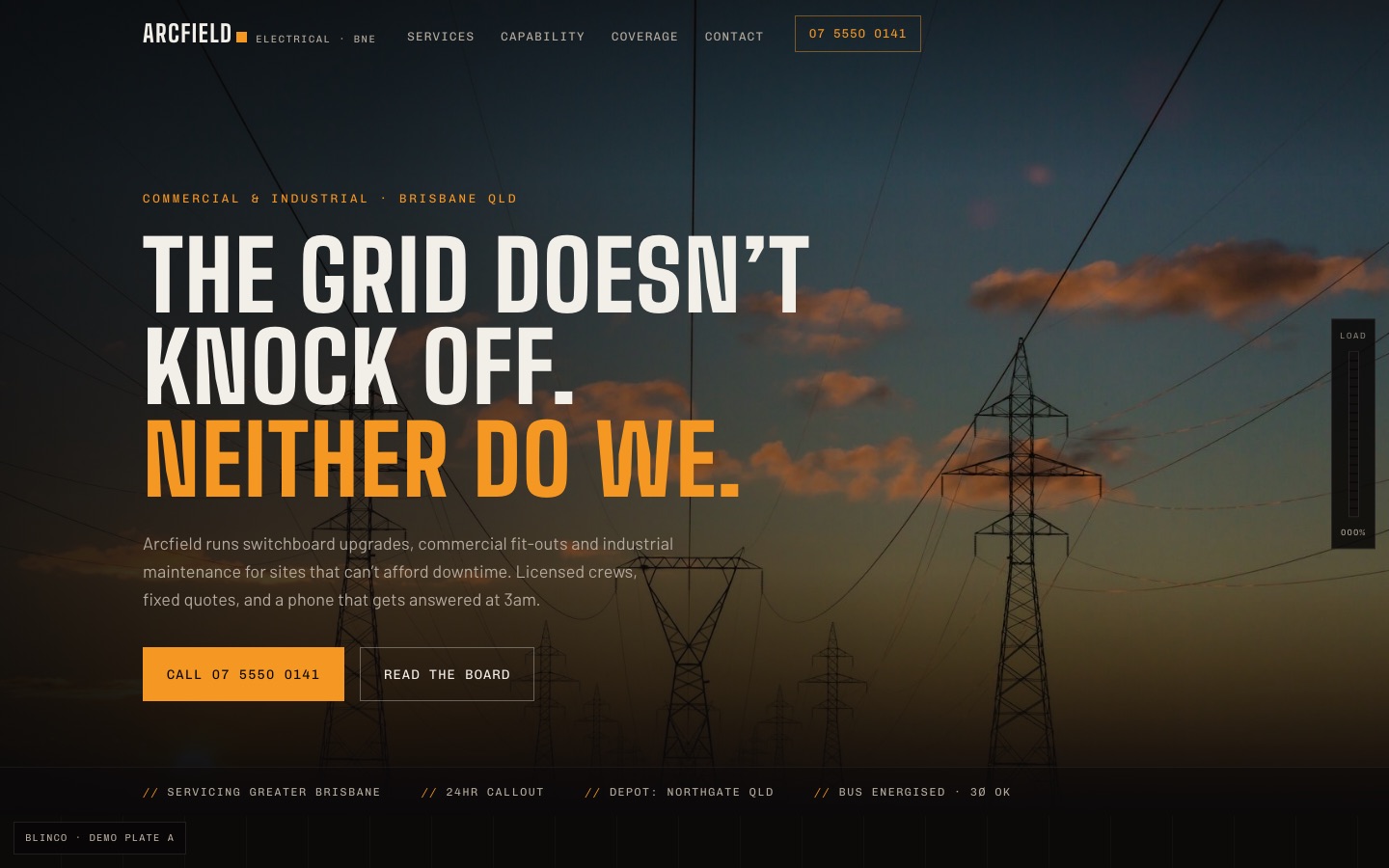 Plate 01Arcfield ElectricalElectrical
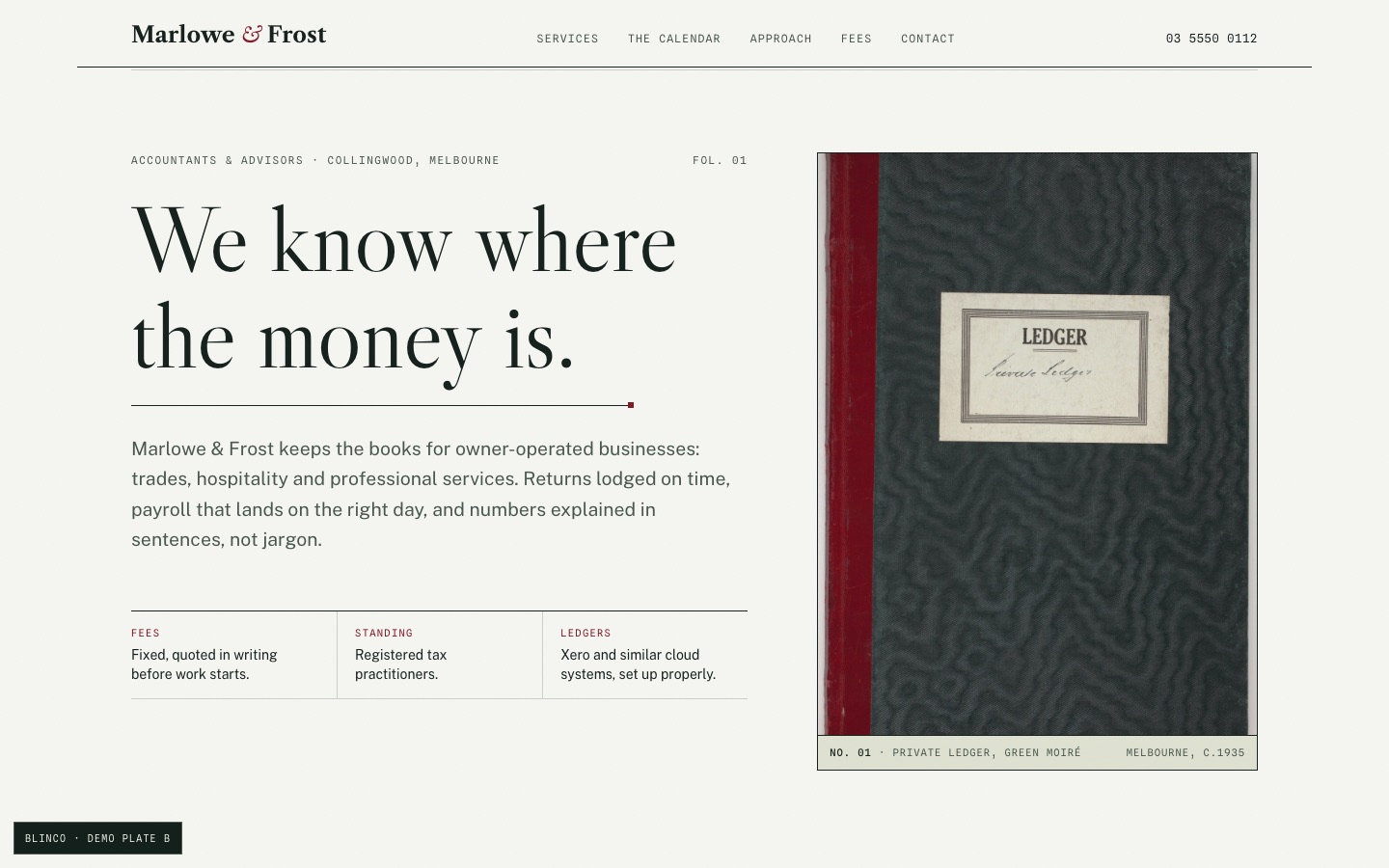 Plate 02Marlowe & FrostAccounting
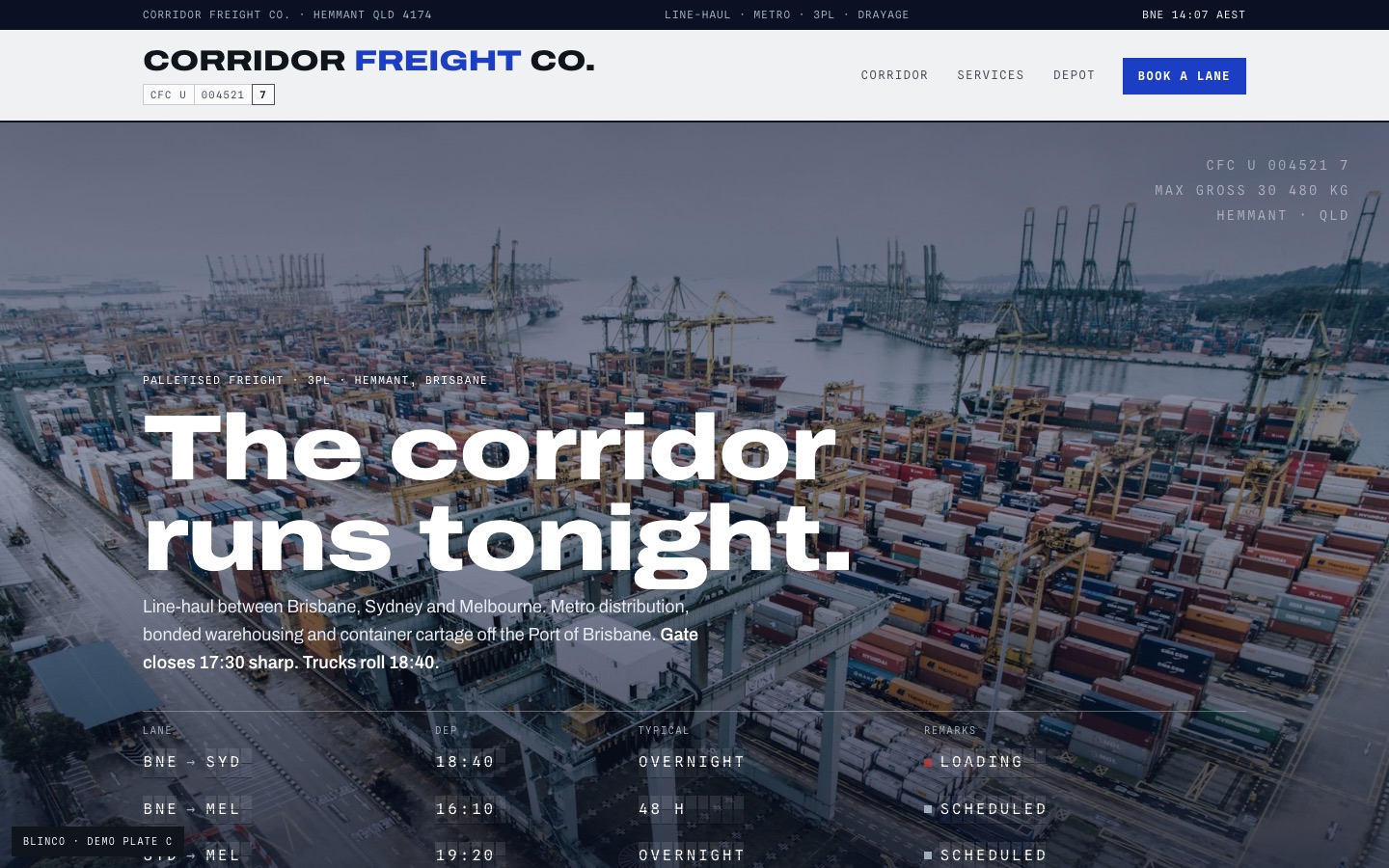 Plate 03Corridor FreightLogistics
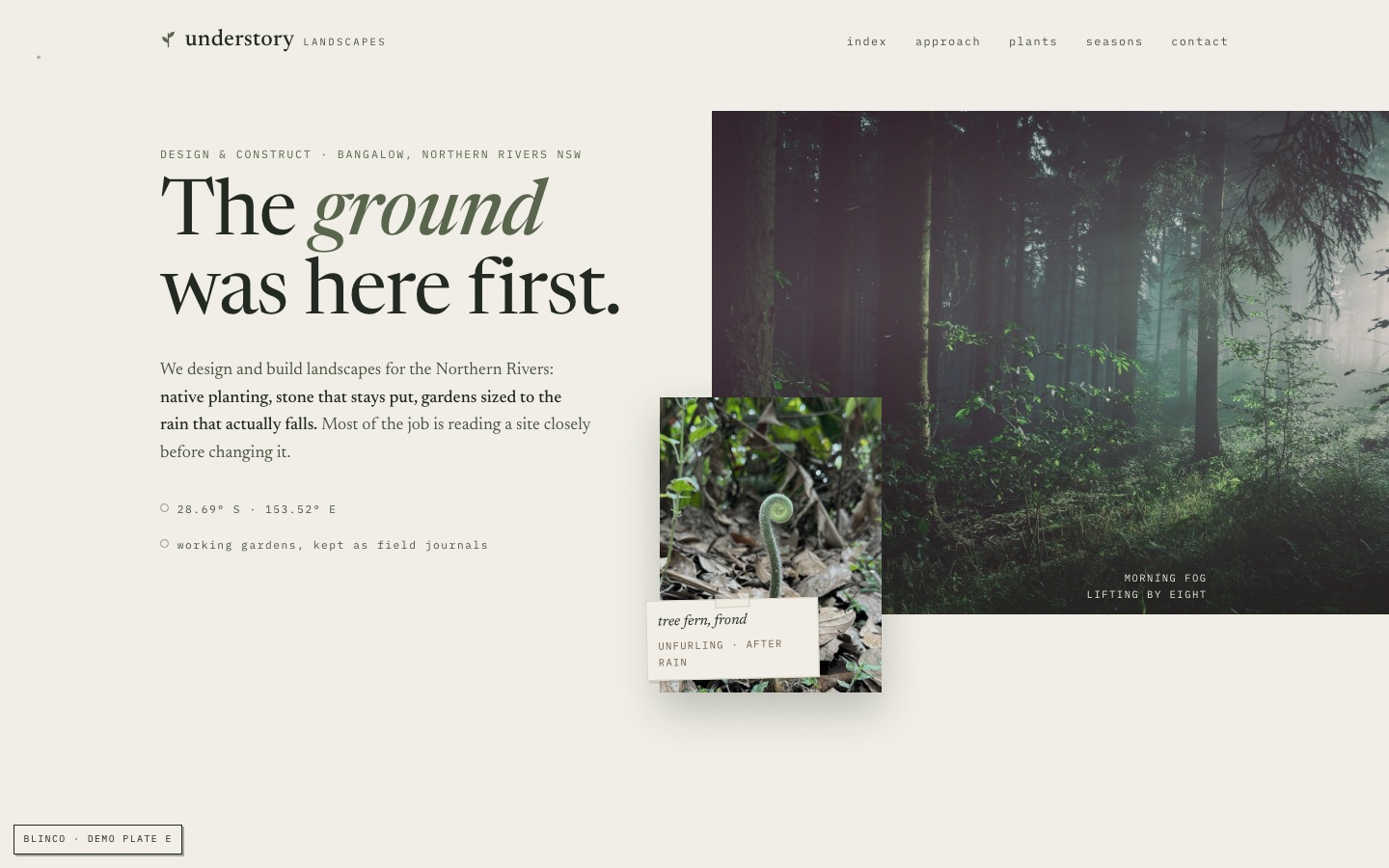 Plate 04UnderstoryLandscaping
The back of house
Five dashboards · five businessesThe plates above are front of house. This is the other screen we design: the operations dashboards from the dashboards page, built as working demonstrations, one for each of the five businesses. A fleet board, a licence register, a purchasing desk, a lodgement program and a client project board, each set in its own palette and type, each with figures that reconcile. Hover a disc to preview it, click to load it, then open it.
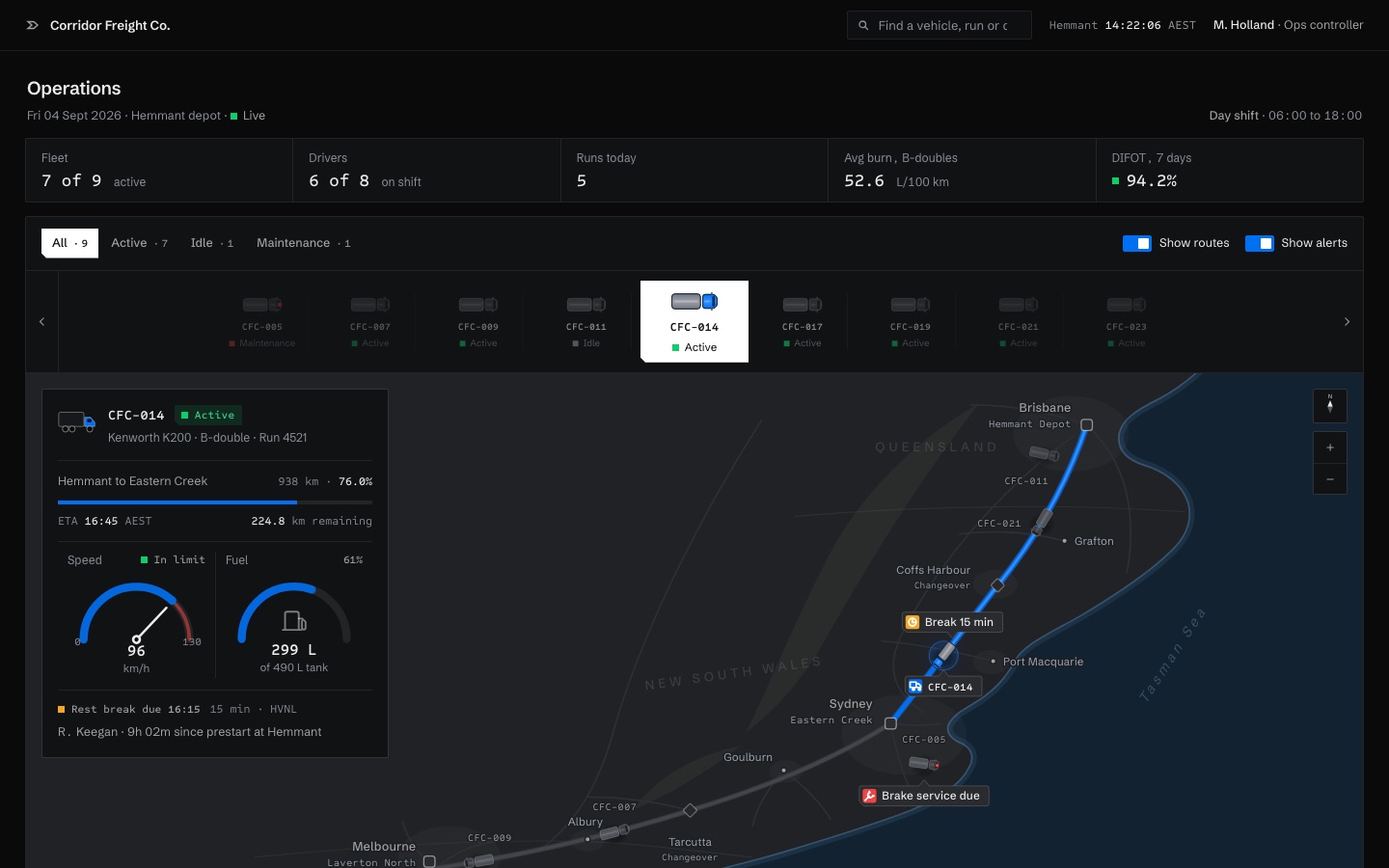 Dash 01Fleet boardLogistics ops
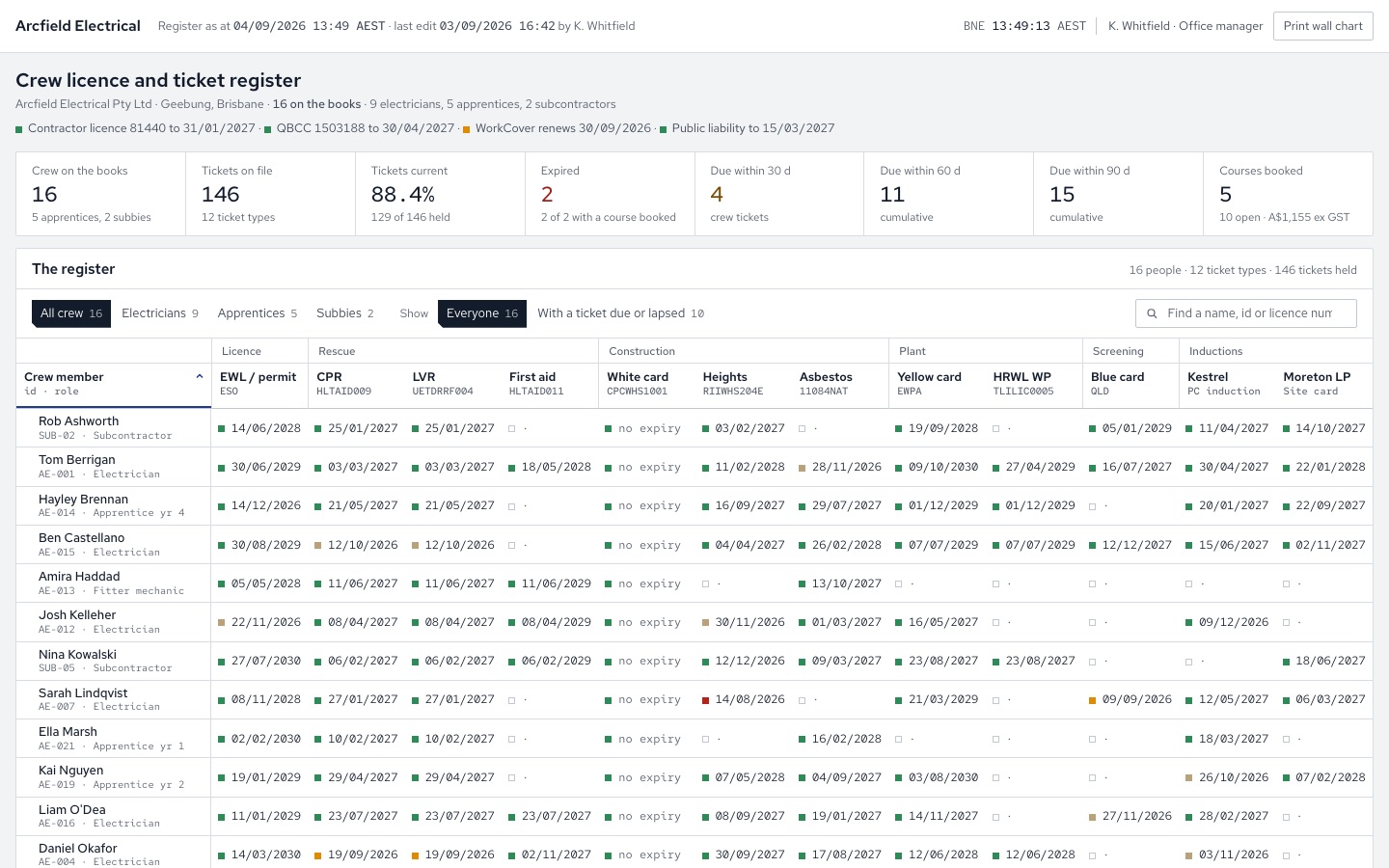 Dash 02Crew registerCompliance
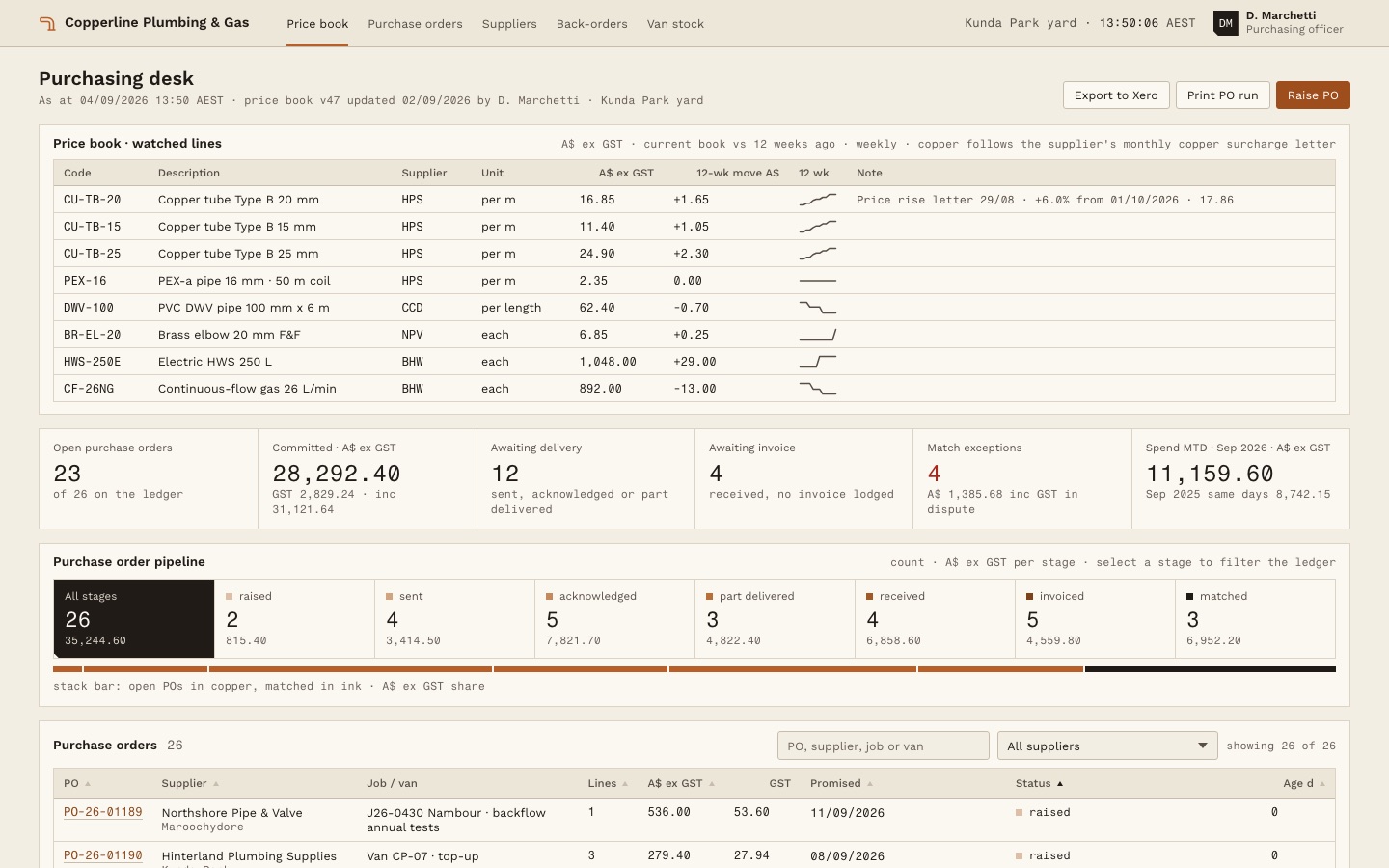 Dash 03Purchasing deskPlumbing supply
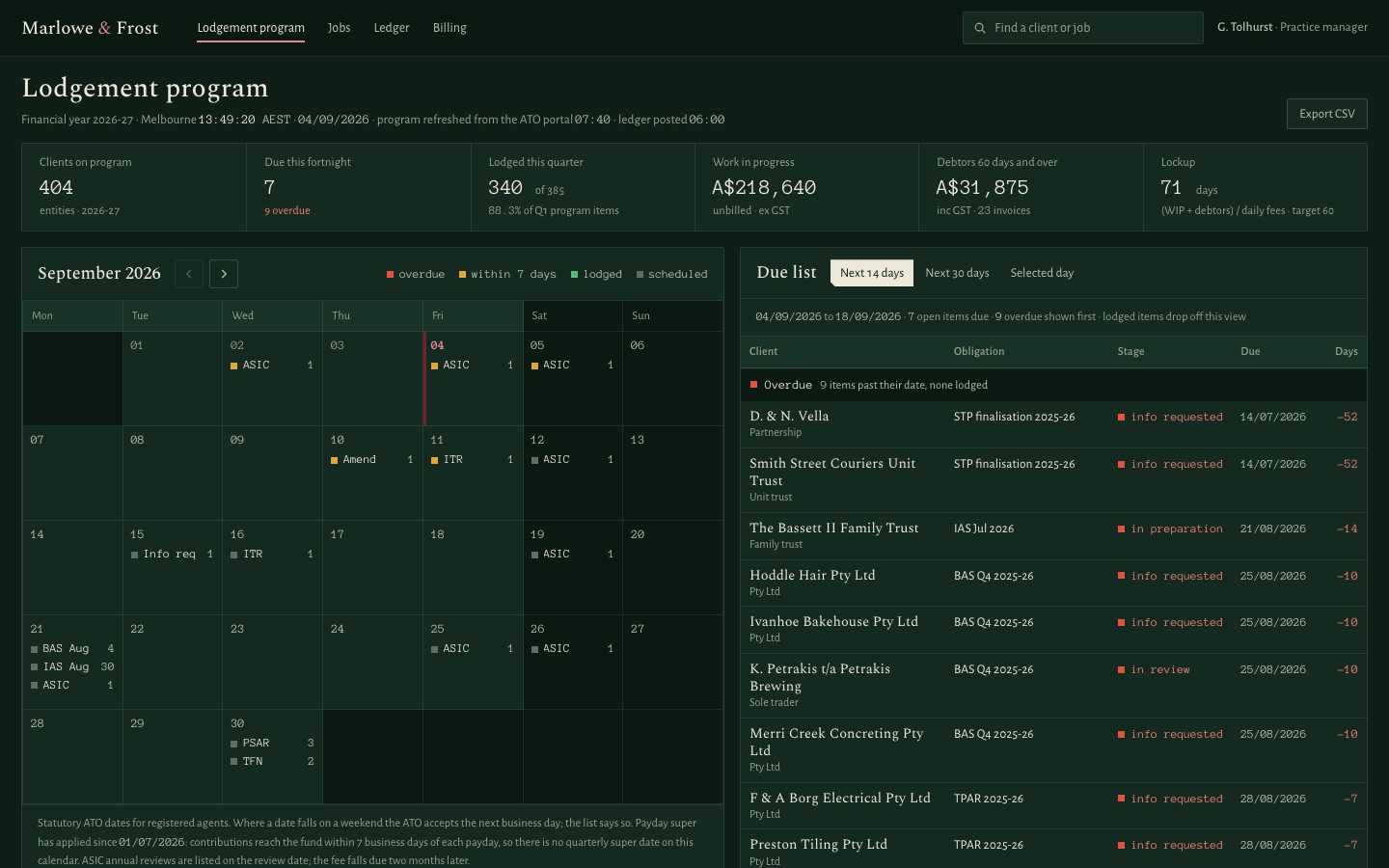 Dash 04Lodgement programAccounting
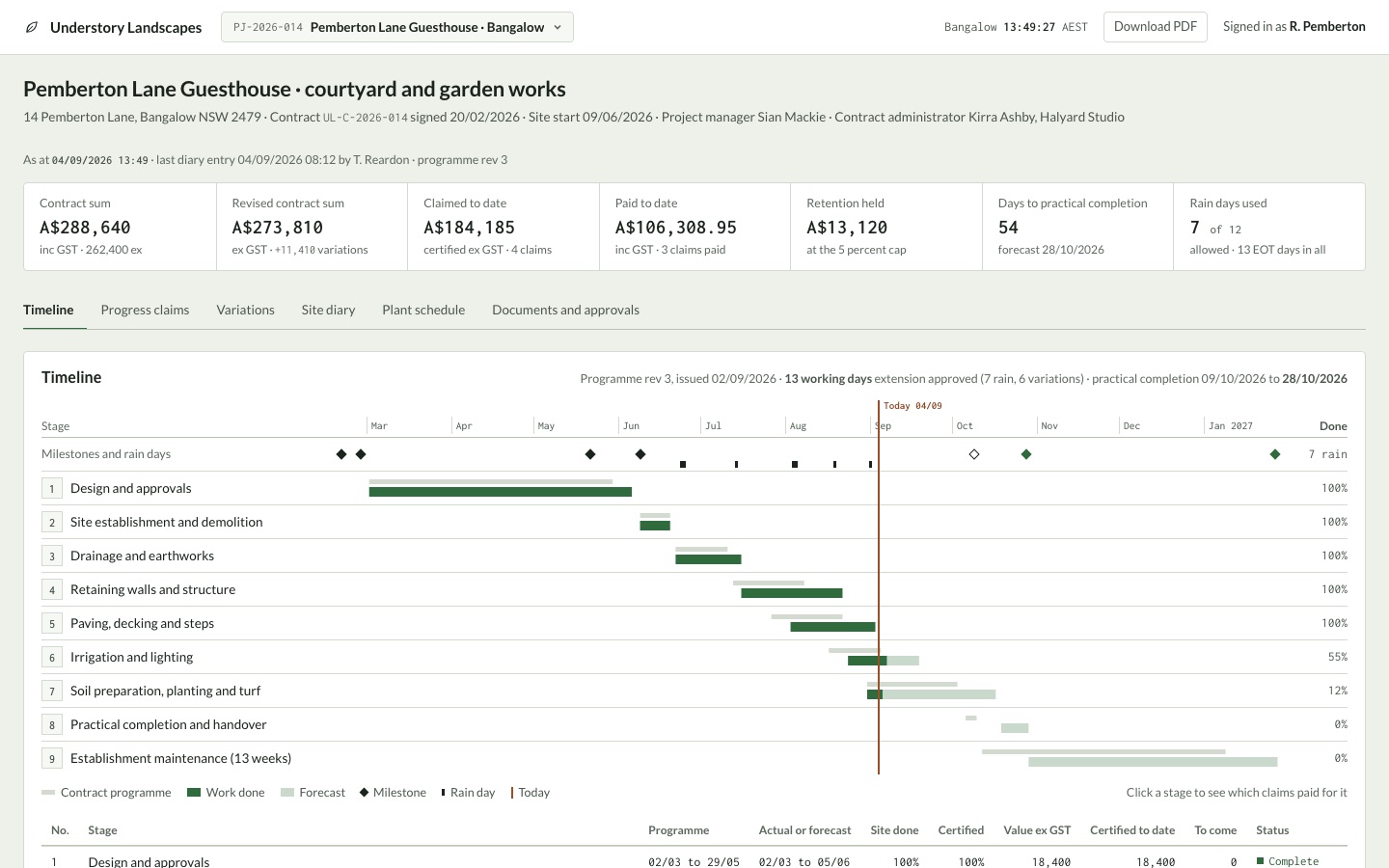 Dash 05Project boardClient portal
Every demonstration is a working page. The businesses are fictional, as set out in the terms of use; photography is credited in each footer where its licence requires; dashboard data is invented and internally consistent.
Automated, not metered
Fig 4.1 · ten years, scrubbed by monthMost business software is priced as a meter: around A$52 per user per month for job management, another tier at each step up, and per-task charges for anything labelled AI. The cost rises with headcount and does not end.
Most of what a business automates is not judgement. It is rules.
We write those rules as plain software on infrastructure you control. Where a model genuinely earns a place, it is used for that task alone and appears in the scope as a line item. You pay to have the system built. You do not rent your own process back by the month.
What it costs, in fullFive steps
Call → runThe call
An intake call that goes deeper than the form: what you use, how you use it, who does what.
One day, written down
You run an ordinary day and write every step as it happens. That log is the process, and we read it.
Agree the build
What gets built, which systems it plugs into, the look you pick. We propose the final design and scope; what is agreed is what is built.
Build, week by week
An update every week, more when it helps. Talking through the week is what keeps a build short.
Run it, with us or yourself
Decided at the start, asked again at the end. Either way, anything not as promised is fixed as part of the job.
Blinco Research
Fig 6.1 · three bodiesThe company keeps a second bench. Blinco Research works on physics and computing problems that do not belong to any client: simulation, instrumentation, methods.
It sells nothing and takes no client briefs. It exists because the harder problems sit upstream of the product work, and what it finds feeds back into what we build. The first notes are published.
Read the notesStart a project
Ten short steps · a reply within one working daySo, let's talk.
A few questions about the business and the part of the week that costs you the most. The reply comes from the person who will build the system, within one working day. Based in Australia, working wherever the work is.
The enquiry form needs JavaScript. Email works as well:
hello@blinco.techPrefer email? hello@blinco.tech reaches the same person.